


Sheet Metal Bending Services
XYC Prototype: Your Trustworthy Sheet Metal Bending Services Manufacturer!
Shenzhen Xie Yicheng Machinery Equipment Co., Ltd. is a professional processing prototypes equipment and service provider. Our company was established in 1997 and is located in Shenzhen, China, mainly aiming to markets such as the United States, Japan, South Korea, the Philippines, and India. We provide CNC processing, sheet metal bending, 3D, injection molding and other services, and use a variety of industrial-grade materials to build functional components in the automotive, medical, and consumer electronics fields.
Rich Experienced
With over 25 years of production experience, our team specializes in 3D printing, CNC machining, injection molding, and sheet metal fabrication to meet virtually any complex geometry part or finish requirement.
Well Equipped
Our production center is equipped with multi-axis CNC milling machines, CNC engraving machines, wire cutting machines, hand grinders, surface grinders and other equipment. We can quickly process complex parts for prototypes, small batches or high-volume production.
Quality Assurance
We conduct dimensional and visual inspections of each product during and after production, and strictly implement ISO 9001, AS 9100, ISO 14001 and ISO TS16949 quality standards.
Customized Services
We provide customized services for our products, include its dimensions, materials, and support OEM and ODM orders.
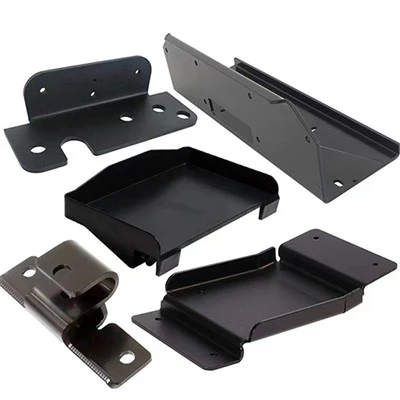
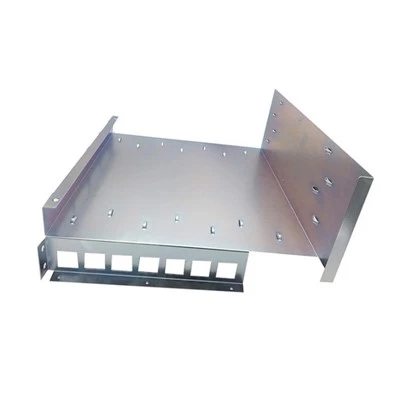
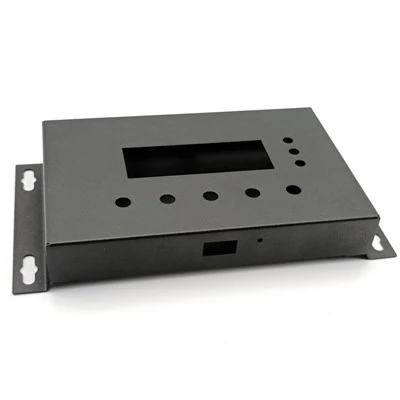
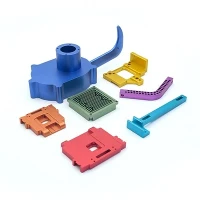
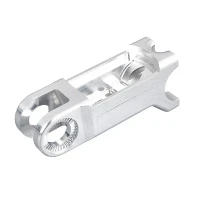
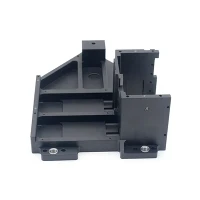
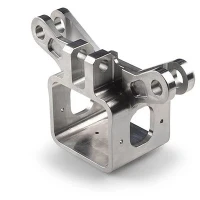
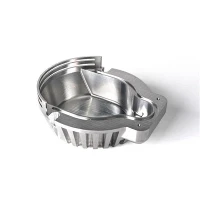

Sheet metal bends are formed using metal bending. Metal bending is a process by which metal can be deformed when applying force to the subject, which causes it to bend at an angle and form the anticipated shape, which often results in it being in a ‘V’ or a ‘U’ shape. A press brake is a tool used in order to bend sheet metal and uses a punch and die to do this. Although press braking may seem straight forward, it can be quite difficult to remain accurate throughout the process. There are several types of press brakes which deliver different levels of force applied, such as mechanical, pneumatic, hydraulic and CNC to name a few examples.
Features of Sheet Metal Bending Services
High Precision
We program sheet metal to facilitate production with precise backgauge positioning within +/-0.0001", real-time material thickness measurement and compensation, and high-precision ram placement, ensuring they have consistent, precise bend angles.
Various Materials
We offer flat pattern bending or 3D sheet metal services in a variety of metals including steel, stainless steel, aluminum and copper, in thicknesses up to 1/4" and in any size.
Flexible Adjustment
We publish all bending parameters (such as k-factor and bending radius) in the material catalog and automatically analyze your part and run bending simulations in the machining system for timely adjustments.
Easy to Use
Our customization service supports your native 3D models and accepts common file formats including STEP, SLDPRT, CATPART, IPT, PAR and IGES, so all you have to do is upload a valid sheet metal design with no changes required.
Application of Sheet Metal Bending
Sheet metal fabrication is cutting, bending, and shaping metal sheets into a final product. This manufacturing process is a critical component of many industries, from aerospace and automotive to construction and electronics. We will explore the practical applications of sheet metal fabrication and its advantages to various industries.
Roofing and Siding for Industrial Buildings
Industrial buildings rely heavily on sheet metal fabrication for their roofing and siding needs due to the larger scale of many factories, warehouses, and other structures in these facilities. Roofing and siding constructed with sheet metal fabrication can also provide insulation benefits in an industrial setting.
HVAC Ducts and Ventilation Systems
Sheet metal fabrication is an essential part of constructing any HVAC system. It involves bending, cutting, punching, and welding sheet metal to create components such as ducts, plenums, dampers, and diffusers. allpapered or uneven surfaces such as brick, unfinished wood or rough concrete walls;.
Flashings
Flashings are thin pieces of metal that protect a building’s exterior from water damage by redirecting water away from vulnerable areas such as roof edges, windows, and doors. The sheet metal is cut, welded, and formed into a desired shape to create the final product.
Downspouts
Downspouts are the vertical pipes that run along the exterior walls of buildings and are designed to carry rainwater from the roof to the ground or drainage system. The fabrication involves cutting and shaping the metal sheet to form the downspout, which can be made in different shapes and sizes depending on the building’s requirements.
Benefits of Sheet Metal Bending Services
Speed of Manufacture
Once designed and programmed, due to the lack of tooling, and the high levels of automation possible (many shops are able to run 24/7 with a handful of personnel monitoring production), sheet metal parts can be produced very quickly, enabling large quantities of components to be produced in relatively short time.
Accuracy
If design considerations are made adequately, sheet metal parts can be extremely accurate, with laser cut holes being within ±0.1mm. There is a high level of repeatability here, as programmed laser cutters and CNC bending machines with the proper software and equipment produce with low levels of variability.
Less Post-processing
Welding often requires multiple processes to complete a part; often the heat can distort the material and requires straightening, and weld spatter needs to be removed via time consuming and labor-intensive grinding and polishing. Neither of these issues are present with bending – the part is ready to go straight from production.
Less Weight
Due to the complexity of bends available, stiffness and strength can be achieved whilst using relatively little material, thus also reducing the part weight. This is beneficial for every step in the supply chain including transport.
Low Cost & Little to No Tooling
Due to the advances in technology, CNC cutting and bending cuts down the manual labour required to produce parts, the sheet metal bending process has benefited from this tech more than most, with CNC controlled tooling, parts can be produced by less-skilled workers in less time, all resulting in a lower end cost.
Reduction in Parts
Making a component from one piece of material instead of multiple parts with joints, reduces time, potential errors, failure points and procurement complexity.
Common Methods of Press Brake
'lt is awesome to work with Creative. amazingy organized,easy to communicate with. responsive with next iterations,and beautiful work.
Mechanical
Due to this press brakes design, it isn’t a suitable option for air bending. The two major benefits of a mechanical press brake are speed and accuracy, however other press brakes are safer and easier to use, such as the CNC press brakes.
Pneumatic
A compressor is used to supply air power for bending the metal sheets. This type of press brake is often used when less pressure is needed. A pneumatic press brake is also best used for bending small parts of metal.
Hydraulic
Hydraulic press brakes often have the latest technology incorporated within them and are best used for precise bending of metal sheet, which makes them a popular choice for sheet metal bending.
Computer Numerically Controlled (CNC)
It commonly has 4 CNC press brakes, including a 4.2 metre bed with 180 tonne capacity. These machines produce very accurate result and are able to bed sheet metal work from just a few millimetres across to sections which are metres long on some of the larger machines.
Types of Sheet Metal Bending Services


Air Bending
During this process the work piece comes into contact with the outside edges of the die, as well as the punch tip. The punch is then forced past the top of the die into the V-shaped opening without touching the V. Air bending is the type of bending where the least amount of contact is made. The equipment only touches the material at 3 points: the punch, tip and the die shoulders. Seen as though the tonnage doesn’t produce the bend, you don’t need as much as you would do when using the coining method. Air bending is the most widely used type of metal bending and it’s not difficult to see why, as there are many advantages to this technique. Because the punch tip doesn’t need to be pushed past the surface of the metal, much less weight is required to bend in comparison to bottom bending and coining.
Bottom Bending
The difference between air bending and bottom bending is that there is a difference in radius between the two. It differs from coining as the punch and the tie don’t make full contact with the material, and there isn’t enough tonnage to make an imprint into the metal. Bottom bending has many advantages, such as greater accuracy and less spring back when using the tooling, which makes it a safer option when considering metal bending techniques.
Coining
Coining is a bending process in which the punch and the work piece bottom on the die. This produces a controlled angle, which leads to little spring back. There is more tonnage required on this type of bending than in air bending and bottom bending. The advantages of coining are that, in order to produce outstanding results, accuracy is essential and that is precisely what the coining method can provide. Along with being accurate, repeating the results is also an easy task when it comes to using this technique. Spring back is also less common when using coining, meaning that the metal is less likely to return to its original state.
Folding
The metal folding technique involves folding the surface part of the sheet metal to form the desired bend. Folding uses clamps, which hold the metal piece in place and apply force to fold the metal at a specified angle to create the sheet metal bend. Clamping beams will hold the longest part of the metal sheet. As the beam rises and folds the sheet metal, the bending beam can move up or down the workpiece. The finalised bend angle is influenced by the folding angle of the beam. This process can handle large sheets of metal and offers a very limited risk of damaging the sheet.
Wiping
The method of wiping involves applying force to the metal, which bends the workpiece into an angular shape by holding it between a pad and a die, then sliding the wiping flange downwards. Similar to the folding technique, it is a plastic deformation of sheet material. Wiping enables you to round the workpiece that is being bent, which can be done by adding angle tangents from the radius to both the die and the flange.
Joggling
Joggling is a process where a machine bends the metal in both directions creating an ‘S’ or ‘Z’ shape. Joggling involves shaping a sheet metal section by section through the use of stringers and formers. This method has been found to be particularly helpful for when you need to bend an extended workpiece in a periodically repeated pattern. The process pushes a sheet metal workpiece into an equipment unit or a brake. It bends the metal by 20 to 30 degrees, using the formers. The part should be released, turned over and bent again until the joggle is achieved.
Rolling
Mostly used for manufacturing large workpieces in the construction sector, rolling is the method used for making tubes or cones in different shapes or bigger radius bends, using a rolling machine. Metal rolling machines have the capability of feeding sheet metal between two rollers, which leads to the sheet emerging into a curve.
Rolling
Mostly used for manufacturing large workpieces in the construction sector, rolling is the method used for making tubes or cones in different shapes or bigger radius bends, using a rolling machine. Metal rolling machines have the capability of feeding sheet metal between two rollers, which leads to the sheet emerging into a curve. To increase the shape of the curve, the operator of the machine will reverse the rollers and then run the metal back through the rollers in the opposite direction. This process is repeated until the desired bend is achieved.
Rotary Bending
Rotary bending is a complex process of sheet metal bending. The process tends to create pipes, which can offer a variety of central line radiuses. The process involves bending a tube with a mandrel inserted inside so that it fits the exact outside diameter.
Step-by-Step Process of Sheet Metal Bending
There are a few different machines that can be used to bend sheet metal. The most common is a press brake machine which itself can be mechanical and fully manual (usually used in small machine shops), or it can be computer numerically controlled (CNC) and uses a hydraulic system. The principles used in both machines are the same, but the way the operator interacts is different. This process below will focus on the operation of a CNC press brake machine:
Calculate the Design Parameters
Before using the press brake, calculate the design parameters including: force required, bend line (the point where the force is exerted), and the order of bends (if there are multiple). The die used to create the bends must also be decided.
Set Up the Press Brake
To set up the press brake, input the information calculated into the CNC machine, so it knows how much force to exert on the metal to create the right bend and in which order these bends will be carried out. The right tool and die must be attached to the press and brake, ready for bending.
Align the Part
Align the metal between the tool and die. When the machine is operated, it will bend the sheet of metal at the bend line.
Engage the Press Brake
Engage the press brake so that the force parameters—inputted into the CNC press brake at step 2—are applied. Once the press brake has bent the metal, the part can be removed and made ready for the next stage of production.
Certificate Photo


Frequently Asked Questions of Sheet Metal Bending Services
Q: What is sheet metal bending process?
Q: What is a sheet metal bender?
Q: What is sheet metal services?
Q: How much does it cost to bend metal?
Q: Which metal is hardest to bend?
Q: Do welders bend metal?
Q: Is sheet metal easy to bend?
Q: Why is sheet metal so expensive?
Q: How do you price sheet metal work?
Q: What is the difference between bending and forming sheet metal?
Q: What is the bend rule for sheet metal?
Q: Is sheet metal easy to bend?
Q: What is it called when you bend sheet metal over on itself?
Q: Does bending sheet metal make it stronger?
Q: What is a metal that can be bent without breaking called?
Q: Does sheet metal stretch when bent?
Q: What is the easiest sheet metal to bend?
Q: What thickness of metal can be bent by hand?
Q: How sturdy is 16 gauge steel?
Q: What is the cheapest type of sheet metal?
As one of the most professional sheet metal bending services manufacturers and suppliers in China, we're featured by quality products and good service. Please rest assured to buy cheap sheet metal bending services from our factory.
cnc machining pom parts, 5 Axis CNC Machining, automated sheet metal bending